

Acasă / Știri / Știri din industrie / 304 vs 316 Stainless Steel Food Rotary Valves: A Practical Selection Guide
Știri din industrie
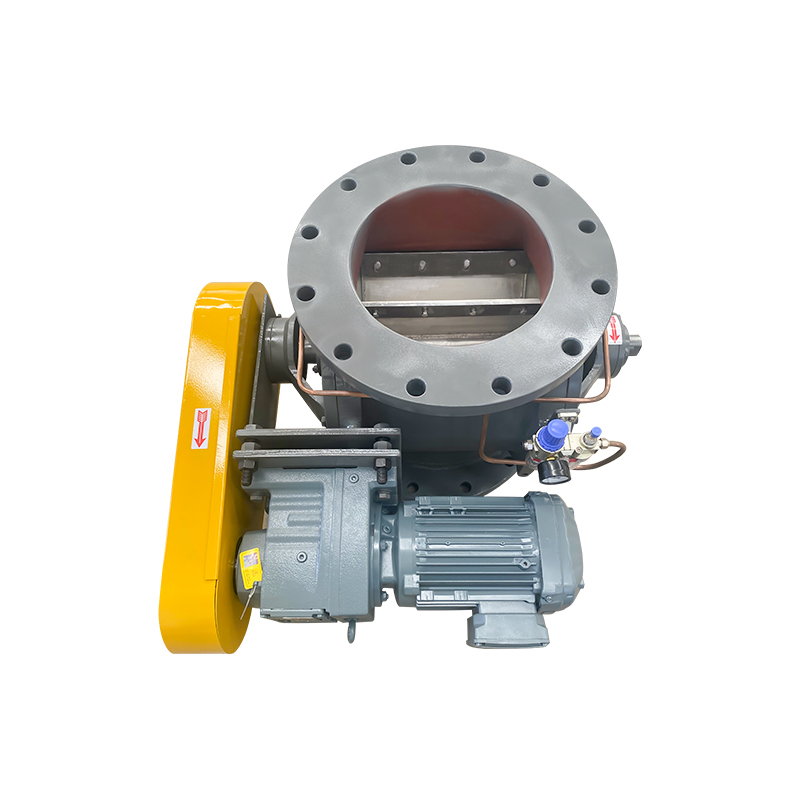
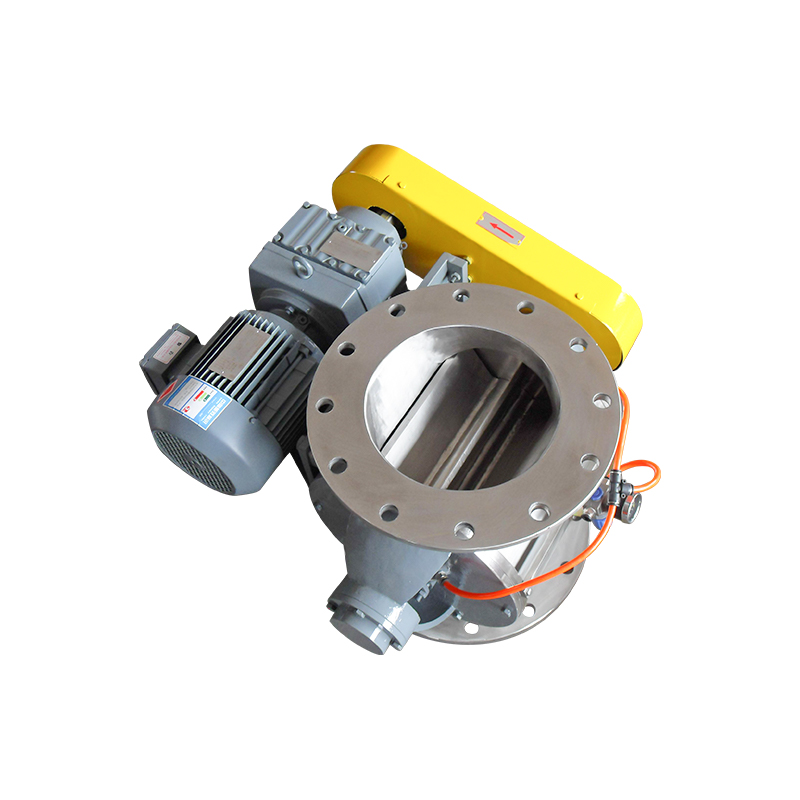
Inside a food processing line, the rotary valve between a silo and a pneumatic conveyor is often the last component considered, until it wears, jams, or contaminates a batch. A food manufacturer replacing a worn rotor on a cocoa-powder line recently received two quotes: one for a 304 stainless steel rotary valve , the other for a 316 stainless unit at a 30% higher price. The question they asked is common: do we really need 316 for food service? The short answer is that most dry bulk food ingredients work reliably with 304, but lines cleaned with chloride-based sanitizers or that handle high-salt or acidic products should specify 316 stainless steel. This article walks through the metallurgical differences, the hygiene design features that matter, and a practical verification checklist for specifying food-grade rotary valves.
Both 304 and 316 are austenitic stainless steels, but 316 contains 2-3% molybdenum, which greatly improves resistance to chloride pitting and crevice corrosion. Chloride ions in salt, brine, and many CIP sanitizers can break down the passive oxide layer on 304 and initiate pits that collect bacteria and lead to failure.
| Property | 304 Stainless Steel | 316 Stainless Steel |
|---|---|---|
| Chromium (typical) | 18% | 16-18% |
| Nickel (typical) | 8-10.5% | 10-14% |
| Molybdenum | None | 2-3% |
| Resistance to chloride pitting | Good | Better |
| Cost index | Baseline | 20-30% higher |
| Typical food use | Dry powders, low-chloride processes | Wet, salt, acid, frequent CIP |
For dry food powders such as flour, sugar, starch, cocoa, or spices, 304 stainless is generally sufficient because the valve contacts product only in a dry, low-chloride environment. However, when a line is washed with sanitizers containing sodium hypochlorite or peracetic acid, or when the product itself carries chlorides (salted snacks, marinades, dairy powders), 316 becomes the safer material. The low-carbon version, 316L, is also preferred for welded parts because it avoids sensitization and intergranular corrosion.
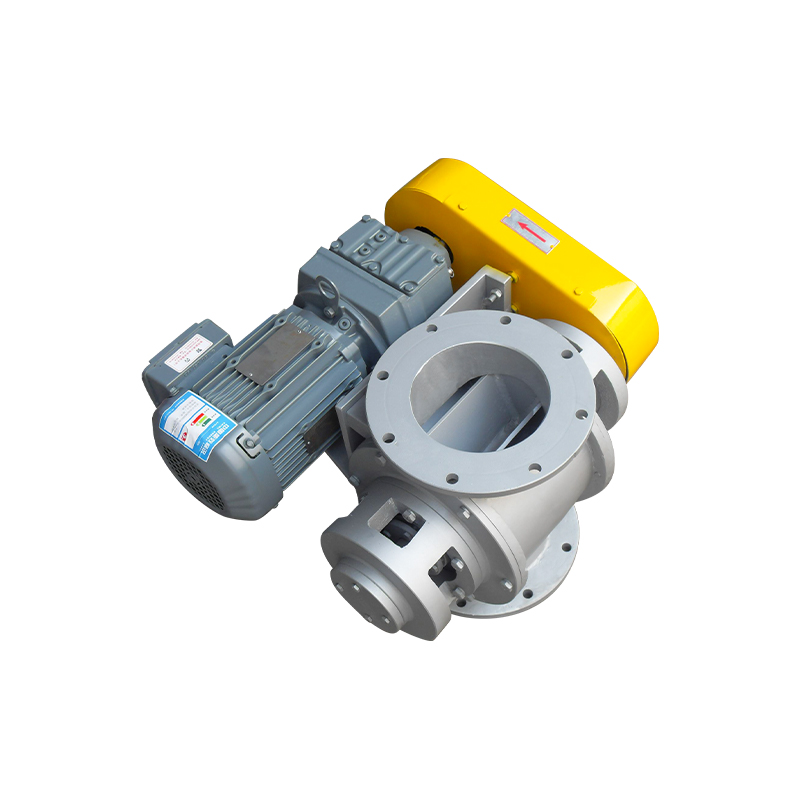
Material grade alone does not make a valve food-safe. The design must also allow thorough cleaning and prevent product build-up. Look for a rotor with rounded edge transitions, a bore with no dead ends, and replaceable seals made from FDA-compliant elastomers such as EPDM or silicone. Surface roughness matters: a Ra below 0.8 μm finish is much easier to clean than a standard sand-cast surface. An ideal valve can be opened and cleaned without removing the housing from the line. The ZKQ series quick-opening fast-cleaning rotary valve is designed for this type of service, with a slide-rod extraction option that lets operators pull the rotor straight out for complete inspection.
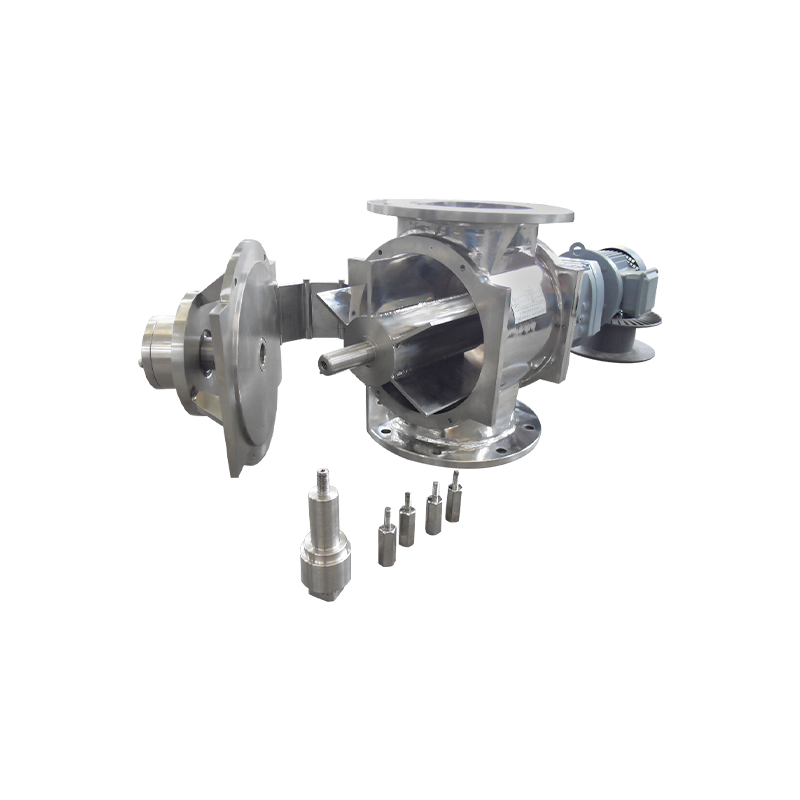 Quick-Opening Fast-Cleaning Rotary Valve for Tight Spaces This valve features a quick-opening end cover and slide-rod rotor extraction, enabling fast disassembly and thorough cleaning without removing the housing. Ideal for crowded food or pharmaceutical lines where hygiene and rapid batch changeovers are critical. View Product →
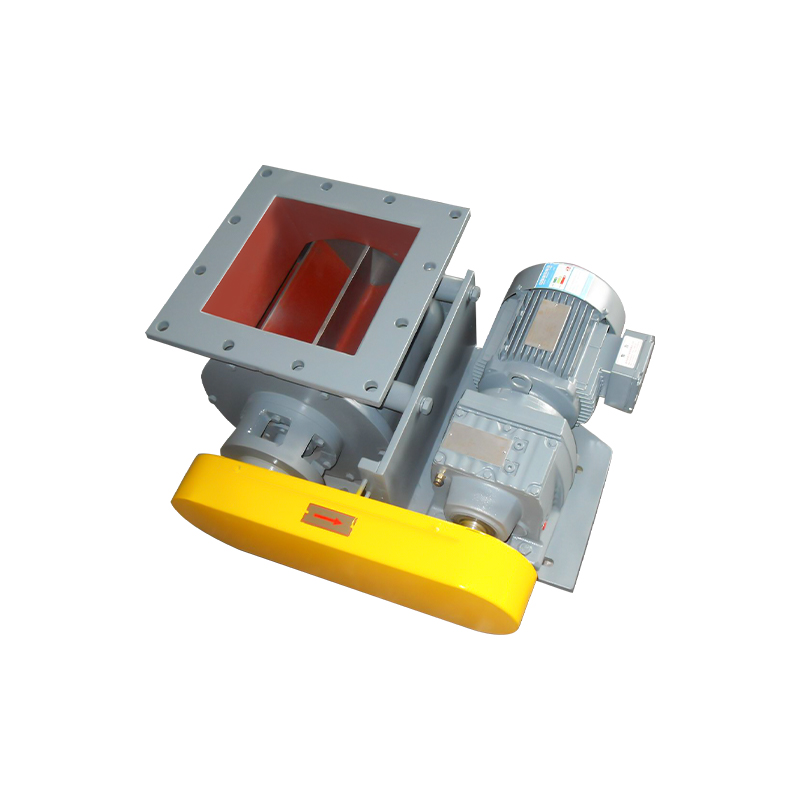
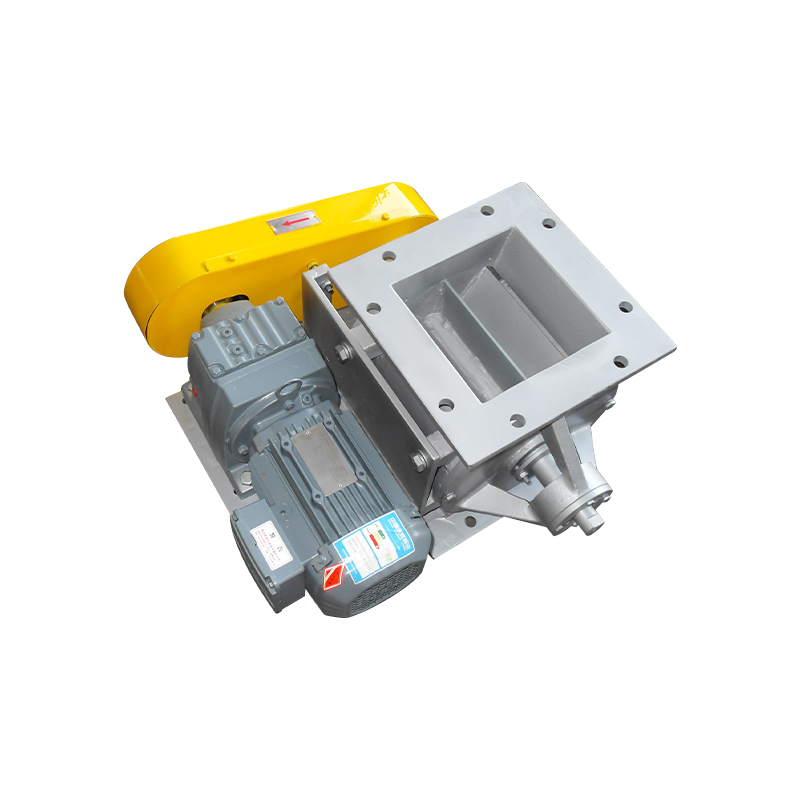
 Installation geometry is just as important as metallurgy. A square inlet flange matches many dust collector and silo hopper openings, and the sharp corners of a square port can actually help cut through powder that tends to bridge in round openings. In practice, as described in an analysis of square-port rotary valves , the square design improves flow efficiency when handling cohesive materials like whole milk powder or cocoa. For food lines where the valve must mate to an existing square discharge chute, a stainless steel square-port rotary discharge valve provides a direct fit in either 304 or 316.
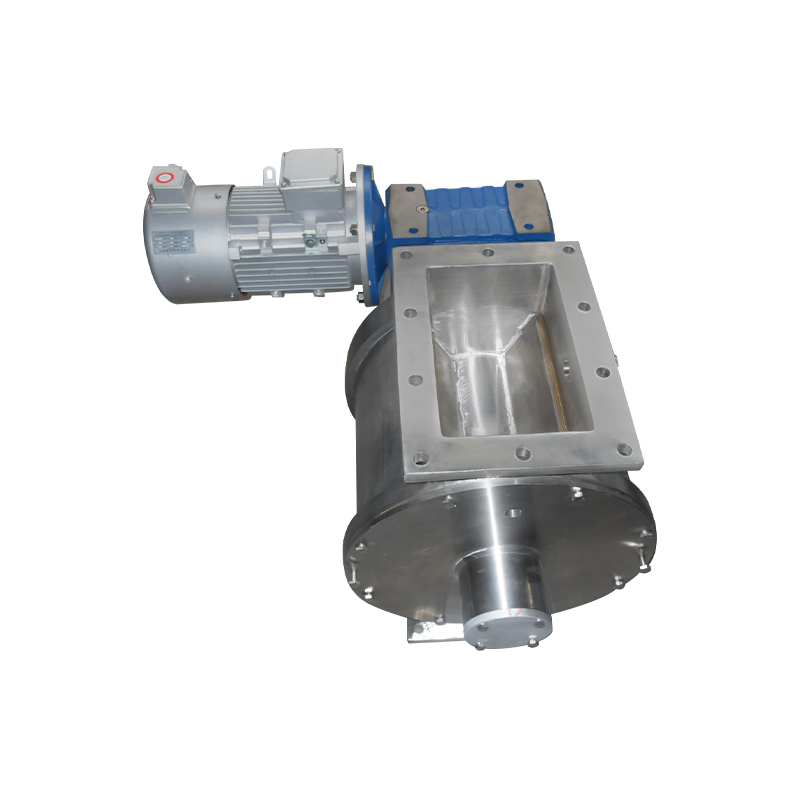 Stainless Steel Square Port Rotary Discharge Valve for Food Lines With a square inlet flange that matches common hopper and chute openings, this valve improves flow of cohesive powders like milk powder or cocoa. Available in 304 or 316 stainless steel to suit your corrosion and hygiene requirements. View Product →
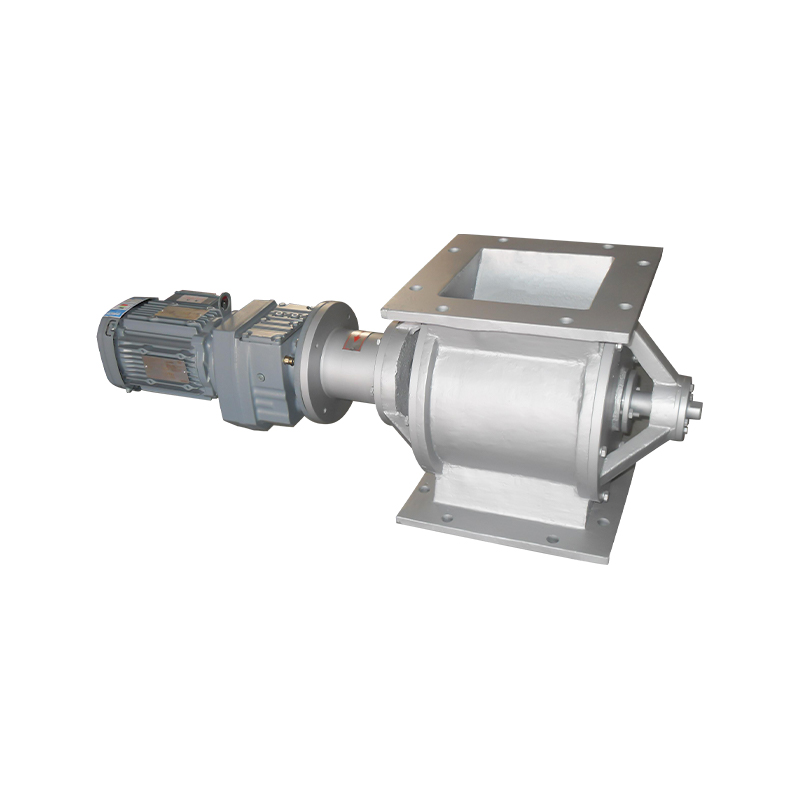
 When a food plant sends flour or granules from a central silo to multiple usage points through a positive-pressure pneumatic system, the rotary valve must maintain an airlock while feeding at a consistent rate. A generic rotary valve may leak high-pressure air through the rotor clearances and push product backward. For this duty, the positive-pressure delivery rotary valve has a deeper housing, tighter clearances, and a standard outlet pipe that connects directly to the conveying line. It is available in stainless steel for food service, keeping the same 304-or-316 decision you made for the valve body.
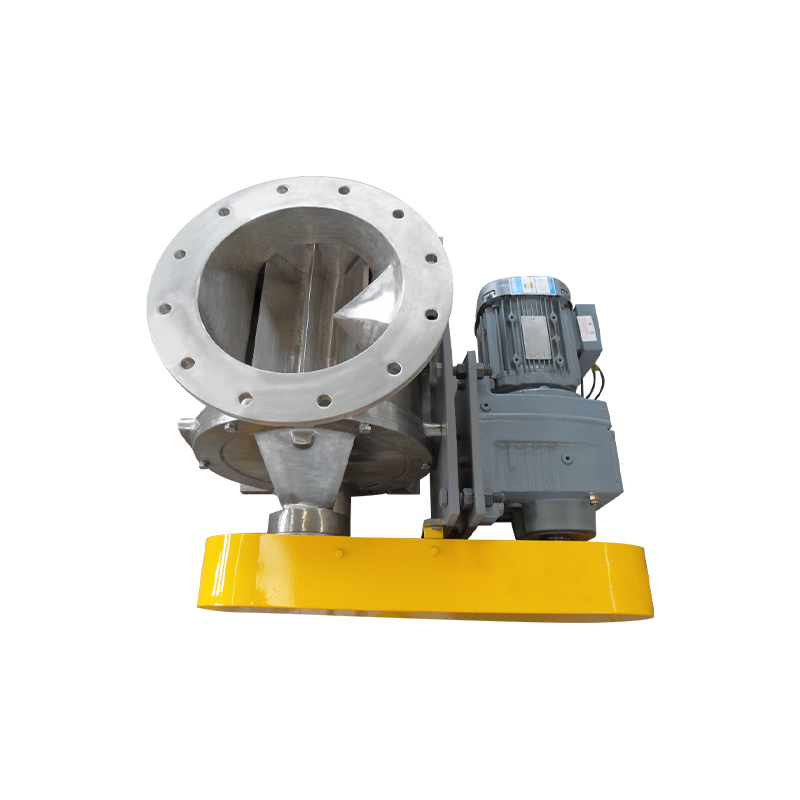 Positive Pressure Delivery Rotary Valve with Equalizing Port Designed for pneumatic conveying under positive pressure, this valve uses an equalizing port and thickened blades to prevent backflow and airlock. It maintains a consistent feed rate and sealing performance, making it reliable for flour or granular transfer systems. View Product →
 When specifying a food-grade rotary valve, do not rely on a material name alone. Ask for a material certificate traceable to the melt (EN 10204 3.1 or equivalent). Confirm the surface finish on product-contact parts and the type of shaft seals. Verify whether elastomers have FDA 21 CFR compliance and whether the valve can be cleaned in place or requires disassembly. Also consider the process conditions: temperature, pressure, and the abrasive nature of the ingredient. A valve with standard tolerances may work in a dry spice line but fail quickly on a milled sugar line if the gap between rotor and housing allows fines to pack and weld into a hard cake. Finally, check the motor and drive torque against the expected bulk density and inlet pressure; a rotary valve is only as reliable as its drive.
Choosing between 304 and 316 stainless steel for a food rotary valve comes down to the chemicals the valve will see: dry powders and neutral wash-down favor 304, while salty, acidic, or heavily chlorinated environments justify 316 and its higher cost. Pairing the correct alloy with a cleanable, correctly sized valve design, and verifying material and seal documentation, will keep a food line running with fewer stoppages and less contamination risk. When in doubt, specify 316L for wetted parts and choose a valve that can be opened and inspected without pulling the entire assembly out of the line.